
Who Will?

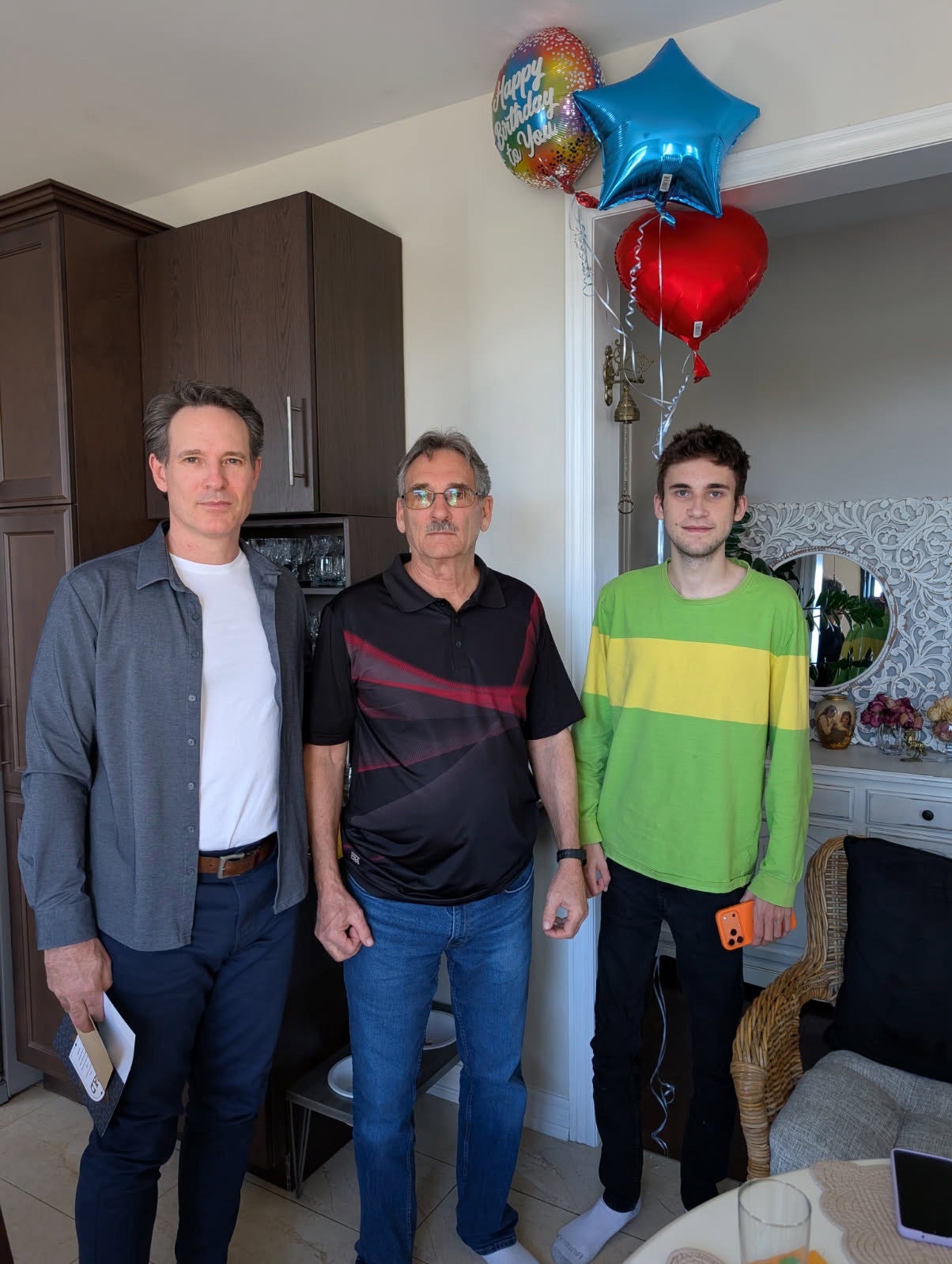
Last week, I spent almost the entire week with my father building a bunkie on my land.
He is seventy-five years old. I am fifty-three.
Our original plan was to pitch a tent, spend several days working on the property, and probably solve most of the world’s problems around a campfire each night. It sounded rugged, practical and masculine right up until the point when two grown men remembered that sleeping on the ground becomes considerably less romantic after the age of fifty.
Fortunately, Derek and Jenn Sloan had a better idea. They invited us to stay in the trailer at their home while we worked.
My definition of friendship may be a little different from most people’s. A true friend is someone I can impose upon when I genuinely need help, and someone who knows they can impose upon me in return. When a relationship cannot survive inconvenience, interruption or sacrifice, I tend to think of it as an acquaintance, however pleasant the relationship may be.
By that definition, I do not have many friends. Derek and Jenn are among the small number of people I include in that circle.
When they learned that my seventy-five-year-old father and I planned to spend the week sleeping in a tent, they offered us the trailer without making us feel as though we were intruding. There was no awkward pause, no reluctant politeness and no carefully disguised hope that we might decline. They simply saw two friends who could use a more comfortable place to stay and opened their home to us.
Their generosity gave my father and me more than a decent bed after a long day. It placed us inside the daily life of a family that is remarkably intentional about how it loves, teaches and supports one another.
Derek and Jenn are as fine an example of a loving and deliberate family as I have encountered. They do not appear to be performing family life for anyone, nor do they pretend it is effortless. They simply understand that strong families are built on purpose.
It was Jenn who suggested that I watch the Christian movie Courageous, which was released in 2011. Somehow, I had missed it.
By the end of the week, I had watched it twice. If you have seen it, you probably remember the final scene. A man stands before a room full of men and asks a series of questions beginning with the same words:
“Who will...?”
Each time, he answers:
“I will.”
The speech is powerful because it does not ask men whether they agree with an idea. It asks whether they are willing to accept responsibility.
As I watched it, I was not thinking only about the characters on the screen. I was thinking about my father, my children, my marriage and a question that I am not sure I ever knew how to ask.
What does an exceptional father actually look like?
I have been a father for more than twenty years, and I still do not know whether I could give a complete answer
.
Nobody hands you a blueprint. Nobody sits you down before your first child is born and explains how to become the kind of father your children will still admire when they are adults.
My early parenting strategy was surprisingly sophisticated: make sure my children know they are loved and try not to become the reason they spend twenty years explaining their childhood to a therapist.
Beyond that, I was largely improvising. Truthfully, I still am.
My son and I do not always connect in the way I wish we did. I live far from my children and do not see them nearly as often as I would choose. Their mothers naturally have far more day-to-day influence over their development than I do.
Some days, the weight of that sits heavily on me.
Life is busy. Work is demanding. Distance complicates everything. Legal battles consume time and energy. Before long, another week disappears, and I find myself asking the same questions many parents probably ask in private.
Am I calling enough? Am I listening carefully enough? Am I teaching the right things? Should I plan more activities? Should I say more, or should I finally stop talking and listen?
Most of all, am I doing enough? I honestly do not know.
For years, I have told my children, “I am not your friend right now.” I do not mean it harshly. My job is not to compete for popularity or become another buddy in their social circle. My job is to prepare them for adulthood.
One day, they will have careers, marriages, children, mortgages, disappointments and responsibilities of their own. My responsibility is to help prepare them for that life. When they are grown and raising families of their own, perhaps the relationship will become more like a friendship.
I still believe that.
Parents should not be terrified of disappointing their children. Sometimes love sounds like “no.” Sometimes preparation requires boundaries, correction and expectations that are not immediately appreciated.
However, Courageous pushed me to ask whether preparation is only about discipline, instruction and responsibility. Perhaps fatherhood is also about becoming someone your children remember as a place of safety.
My own parents divorced when I was a baby. My mother brought a great deal of chaos into my childhood, while my father did not. I never lived with him, yet the happiest memories of my childhood were often the times I spent with my dad. I felt safe with him. I felt secure.
Looking back, one of the things I admire most is that he never spoke an unkind word about my mother to me, even though she often spoke badly about him. He carried that burden himself instead of placing it on his son.
Children should not be recruited into adult resentment. They should not be required to choose sides, absorb bitterness or become emotional support for a wounded parent.
As an adult who has now experienced divorce myself, I have spent a great deal of time thinking about how children respond when their parents separate.
One realization has stayed with me, although I can only speak with certainty about my own childhood. As a boy, I believed my mother needed me more than my father did. I felt responsible for protecting her. I could not have explained that feeling at the time, but I can see it clearly now. My father seemed strong enough to stand on his own. My mother did not.
I have often wondered how many children make similar choices without fully understanding why.
Sometimes, a child may not choose the parent they love more. They may choose the parent they believe needs them more.
A child can become emotionally attached to the idea that one parent must be protected. Meanwhile, the stable parent appears capable, secure and unlikely to fall apart without them.
The stronger parent may experience the child’s choice as rejection, even though the child may actually be expressing confidence that the parent will survive.
I am not suggesting every custody decision or living arrangement can be explained this way. Children make choices for many reasons. I only know that this was true in my own life.
My father’s strength made me believe he would be fine. His stability was so dependable that I did not think he needed saving. What I did not understand as a child was how much I needed what he gave me.
Peace.
Security.
Safety.
Last week, more than fifty years after my parents divorced, he was still giving me the same thing.
For several days, my father and I worked side by side on the bunkie. We measured lumber, cut boards, lifted walls, solved problems and made the mandatory extra trips to the hardware store. Every construction project begins with a budget and ends with a personal relationship with someone in the lumber department.
At times, I was a fifty-three-year-old man building on my own land. At other times, the child in me still needed his dad. My father delivered in a way only a father can.
Several times, he stopped me from making mistakes that would have cost me a considerable amount of money and hours of unnecessary work. He saw problems before I could see them, not because I am incapable, but because he has already lived long enough to recognize the mistakes before they happen.
He did not belittle me, take over the project or make me feel foolish. He stood beside me, shared what he knew and allowed me to benefit from the experience he had earned. I am never too old to learn from my father, and he is never too old to teach me.
Fatherhood does not end when a son becomes a man. The relationship changes, but the need does not disappear.
We spend years preparing children to become independent, yet independence does not have to mean isolation. Perhaps the goal is to raise children who know how to stand on their own while never doubting that their father will still stand beside them.
My week with Dad also helped me understand something about my marriage to Joanna.
As the stepmother of my children, Joanna has never tried to replace their mothers. She has never tried to push me aside, take control of my relationship with my children or position herself as the more capable parent.
She wants to support me in my role as a man and as a father. The distinction is important.
In many families, one adult begins taking over the responsibilities of the other. Sometimes it happens because one person is more organized. Sometimes it happens out of frustration. Sometimes it happens because taking over is quicker than waiting for another person to learn.
The immediate problem may get solved, but a longer-term problem can quietly begin. When one adult repeatedly communicates, “I will do it because you are not up to the challenge,” the other person eventually hears the message.
You are not capable. You cannot be trusted. I do not believe in you. Over time, taking over can teach helplessness.
A father who is never trusted with fatherhood may gradually withdraw from it. A husband who is constantly corrected, diminished or emasculated may eventually stop trying to lead. The same principle applies in reverse when a man undermines a woman, dismisses her judgment or treats her contribution as insignificant.
People often rise to the expectations placed upon them, but they can also shrink beneath contempt.
Support should not mean replacing someone. It should mean helping them become stronger in the responsibilities that belong to them.
My father did that while we built the bunkie. He did not take the project away from me. He helped me succeed at it.
Joanna approaches my role as a father in a similar way. She does not want to become the parent my children already have. She wants to strengthen my relationship with them and support me in becoming more deliberate about the father I am.
I cannot honestly say she reminds me of the father I always wanted to become, because after more than twenty years of parenting, I am still not sure I ever formed a clear picture of what that father looked like.
I knew I wanted my children to feel loved. I knew I wanted them to feel safe. I knew I did not want to damage them.
When my children were little, my parenting strategy was surprisingly sophisticated. I wanted them to know they were loved, and I wanted to avoid being the reason they spent the next twenty years explaining their childhood to a therapist. Beyond that, I was making it up as I went.
It requires asking better questions.
What do my children need from me now? What will they need from me when they are adults? What example am I giving them of manhood, marriage, love, discipline, sacrifice and responsibility?
Joanna helps make those conversations more meaningful because she does not approach them as a competitor. She approaches them as my wife and partner.
Our marriage also gives me another opportunity I once feared I had lost. My relationship with the mothers of my children ended, but my opportunity to model a loving relationship did not.
My children are still watching. The love they see today shapes the love they expect tomorrow.
They are watching how Joanna and I speak to one another. They are watching how we handle disagreements, how we forgive, how we show affection and how we support one another’s roles.
My daughter is learning what she should expect from the man she may one day marry. I want her standards to be high. I want her to expect kindness without weakness, leadership without control, protection without possession and love that is demonstrated through consistent action.
My son also needs a model. A boy learns how to become a man partly by watching the men around him. He needs more than instructions about masculinity. He needs to see what a good man does with responsibility, failure, anger, loyalty, work, marriage and family.
He needs to see that leadership is not domination. It is service, accountability and the willingness to carry weight without constantly announcing how heavy it is.
Being a good enough father is not good enough. Being a good enough husband is not good enough either.
Our children deserve more than adults who merely avoid obvious failure. They deserve examples worth following.
Derek and Jenn reminded me of that through the way they live as a family.
Joanna reminds me of it through the way she supports me as a father and husband.
My own father reminded me of it while standing beside me on the land, quietly preventing me from building several expensive mistakes directly into the walls.
When I think back on my childhood, I do not remember every conversation I had with my father. I do not remember every lesson he tried to teach me, every birthday or every Christmas.
I remember how I felt.
I felt safe.
More than fifty years later, I still carry that feeling.
When I watched the final speech in Courageous, the speaker kept asking, “Who will?”
I initially thought the answer was simply, “I will.”
After sitting with the question, I realized the greater challenge is not making the declaration. The greater challenge is deciding what I am actually committing myself to become.
I have already been a father for more than twenty years. The question is no longer whether I will accept the title. The real question is what my children will remember when they are fifty-three years old and telling stories about me.
Will they remember that I was busy? Will they remember that distance made everything harder? Will they remember the mistakes, the missed opportunities and the times I did not know what to do?
Probably.
Children tend to remember more than parents would prefer. I hope they also remember that I never stopped trying to become a better man.
I hope my daughter remembers watching a marriage built on love, respect and mutual strength, and that she refuses to settle for less. I hope my son remembers seeing a man who accepted responsibility, admitted mistakes and kept learning, even at fifty-three years old. Most of all, I hope both of my children remember how they felt when they were with me.
I already know what I remember about my father. He made me feel safe.
If my children can one day say the same thing about me, I will consider that a life well lived. Who will keep learning, even after twenty years of fatherhood?
I will.
Who will refuse to quit because distance, divorce or failure made the job more difficult?
I will.
Who will try to become the kind of man his son can follow and his daughter can trust?
I will.
Not because I have mastered fatherhood. Not because I always know what to do.
I will because my children are still watching, my father is still teaching, my wife is still standing beside me, and there is still time to become better.
A Note to My Readers
One of the responsibilities of a father is preparing his family for the future.
Sometimes that means teaching values. Sometimes it means leading by example. Sometimes it means making sure the people you love are prepared for emergencies before those emergencies ever happen.
That conviction is what led me to write The People’s Emergency Plan.
Whether you’re responsible for a family of six, living on your own, or simply want greater peace of mind, the book will help you build a practical emergency plan for natural disasters, power outages, financial disruptions and many of the unexpected events life throws our way.
Preparation isn’t about fear.
It’s one of the simplest ways we show the people we love that we’re thinking about tomorrow, not just today.
📘 Learn more here:
https://tommarazzoofficial.com/training
Tom, the line that struck me most deeply was your observation that children should never be recruited into adult resentment.
For me, this is not theoretical. I have lived with the consequences of a marital breakdown in which the conflict did not end when the marriage ended. It continued through the stories told to the children and, over time, became part of their inheritance.
Children should never be placed in the position of having to protect one parent, judge the other, or demonstrate loyalty by withholding love. They did not create the marriage, they did not cause its failure, and they should not be required to carry its grievances.
A parent may convince himself that he is merely telling the children “the truth.” But children rarely possess the experience, independence or access to both sides necessary to judge an adult relationship. Repetition can gradually become accepted history, and resentment can survive long after the events that produced it.
Your father’s refusal to speak badly about your mother was therefore much more than admirable restraint. It was an act of protection. He accepted the burden of his own pain rather than transferring it to his son.
That, to me, is one of the deepest themes in your essay. Parenthood is not only about what we pass on. It is also about what we possess the wisdom and discipline to prevent from being passed down.
Every generation inherits something from the one before it: character, judgment, responsibility, trust, resentment, fear. The task is not merely to preserve what deserves to survive, but to ensure that what damaged us does not become the burden of those who follow.
Perhaps one of the greatest duties of parenthood is knowing the difference between what we must teach the next generation and what, through discipline and love, must end with us.
I will because my children are still watching, my father is still teaching, my wife is still standing beside me, and there is still time to become better. ... Love this. Wisdom bro.